Autism spectrum disorder (ASD) has long been a topic woven with complexities, not only because of its diverse manifestations but also due to the intricate interplay of genetic and environmental factors shaping its incidence. One question that persistently intrigues researchers, clinicians, and families alike revolves around the role of family history: does having relatives diagnosed with autism truly elevate the chances of the condition manifesting in subsequent generations? This exploration promises to shift the conventional understanding and ignite curiosity about the profound implications of hereditary patterns in autism.
Familial Patterns: A Genetic Mosaic
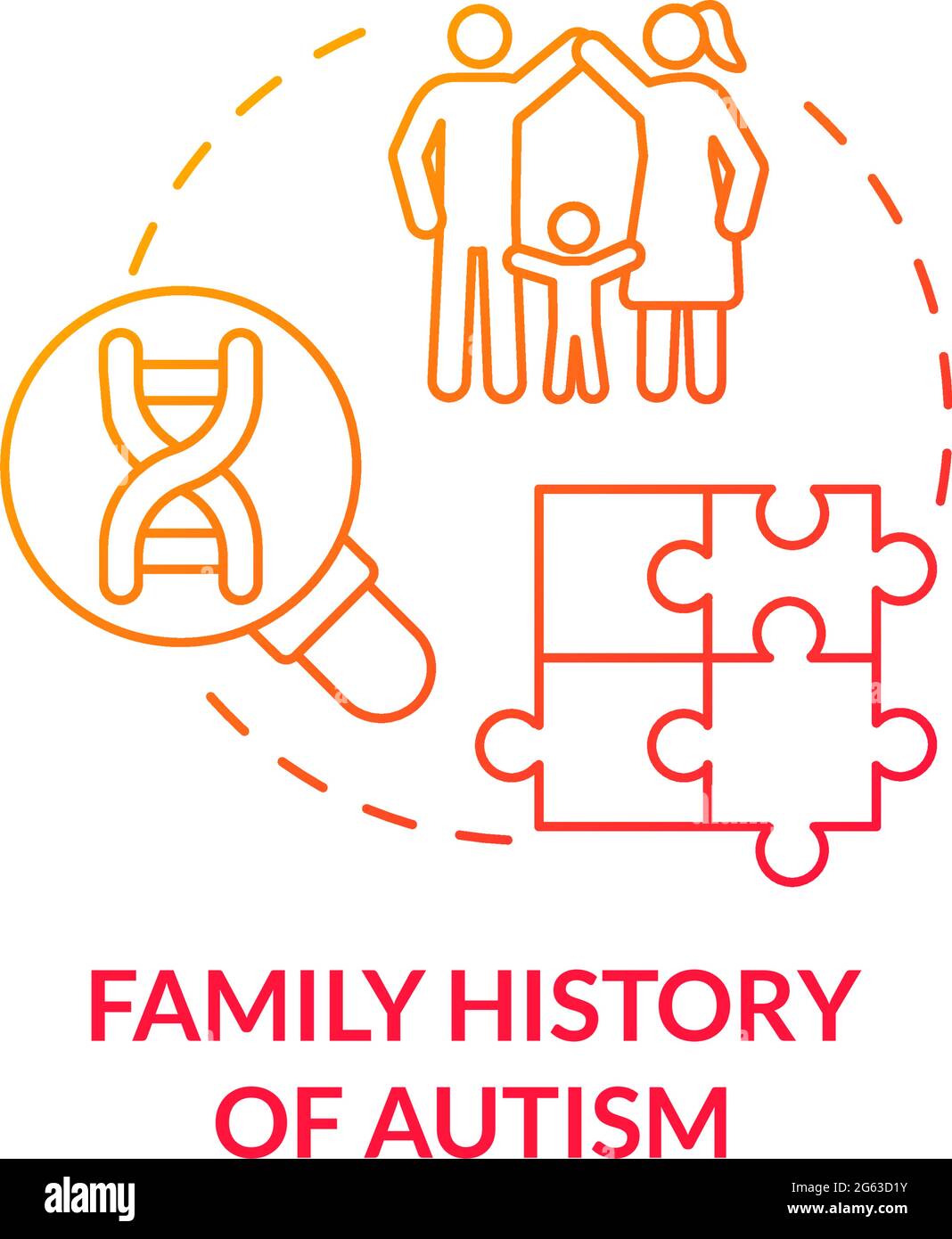
The concept of autism being hereditary is not new, but recent advances in genetics have reshaped how we interpret this relationship. Families with one member diagnosed with autism often grapple with the uncertainty of “Am I next?” or “Could this affect my unborn child?” Genetics forms a cornerstone in this discourse. Rather than a simple cause-and-effect scenario, autism presents as a polygenic tapestry—where multiple genes interact subtly yet powerfully, increasing susceptibility.
Scientific investigations employing twin studies have demonstrated remarkable concordance rates. Monozygotic twins, who share 100% of their DNA, exhibit strikingly higher rates of both being diagnosed with ASD compared to dizygotic twins, suggesting a strong hereditary component. However, the inheritance pattern is far from Mendelian simplicity; instead, it is multifactorial, compounded by gene-environment interactions. This intrinsic complexity underscores that a family history, while influential, does not cast an unalterable destiny.

The Diagnostic Importance of Family History
Clinicians increasingly recognize that thorough family history assessments form an indispensable facet of autism diagnosis. Documenting neurodevelopmental and psychiatric traits across generations helps clinicians unravel subtle patterns and identify potential risk alleles that could predispose a child to ASD.
Moreover, family history can guide early surveillance and intervention strategies. Parents who are aware of an elevated risk see their healthcare providers more cautiously monitor developmental milestones. Timely diagnosis translates into better access to specialized therapies and educational accommodations, thereby altering the trajectory of an affected child’s life.
While genetic testing for autism is still evolving, emerging tools leverage the knowledge of familial patterns to yield personalized insights. This paradigm shift—from reactive diagnosis toward proactive risk assessment—is revolutionizing clinical practice, emphasizing the prognostic value of family history in autism.
Environmental Interactions: The Hidden Dimensions
Genetics alone paints an incomplete picture. Environmental factors act as the unseen sculptors, modulating genetic predisposition and sometimes triggering the onset of autism symptoms. Within families, the shared environment often compounds the genetic susceptibilities, creating a layered risk matrix that demands nuanced understanding.
Research has identified myriad environmental exposures during critical windows of prenatal and early postnatal development—from maternal infections to toxins and nutritional imbalances—that may exacerbate the expression of autism in genetically susceptible individuals. The family environment, encompassing socioeconomic factors, stress levels, and access to healthcare, further shapes developmental outcomes.

This confluence of genetics and environment redefines the very notion of “risk” from static to dynamic, highlighting opportunities for intervention at various levels. Understanding these environmental influences within the context of family history opens new avenues to mitigate risk proactively.
Epigenetics: Bridging Inheritance and Environment
The emerging field of epigenetics offers compelling insight into how family history and environmental factors transcend traditional genetic inheritance. Epigenetic mechanisms modulate gene expression without altering the underlying DNA sequence, often in response to environmental stimuli. These modifications may pass from one generation to the next, potentially influencing autism risk in descendants.
Through epigenetic lenses, the familial transmission of autism risk is seen as a dynamic interplay where ancestors’ exposures and experiences reverberate into the genetic landscape of their progeny. This provides a more fluid understanding of risk—one where historical family environments may contribute as much as genetic code itself.
Risk Assessment and Counseling: Navigating Uncertainty
For families grappling with autism risk, genetic counseling is invaluable. Counselors provide tailored risk assessments that account for family history, identify potential hereditary risks, and discuss the implications of genetic testing. This not only empowers prospective parents with nuanced knowledge but also prepares them emotionally and practically for different scenarios.
Genetic counselors emphasize that elevated familial risk does not guarantee autism but suggests heightened vigilance. This perspective helps families balance hope and realism while engaging actively in preventive and supportive measures.

A Paradigm of Hope: Transforming Risk into Action
Understanding family history’s role does not consign families to fate; instead, it furnishes a blueprint to transform uncertainty into informed action. Early and continued engagement with healthcare professionals, combined with heightened awareness of environmental factors, cultivates resilience and opens pathways to intervention that can substantially influence outcomes.
Moreover, evolving technologies promise greater precision in unraveling the genetic intricacies of autism, ultimately fostering an era of personalized medicine. Families no longer traverse the autism landscape blindly but are equipped with knowledge, resources, and hope.
In conclusion, the relationship between autism and family history is neither deterministic nor straightforward. It is a compelling interplay of genetic predispositions, environmental exploration, and epigenetic nuances that invites us to rethink risk not just as a statistic but as a multifaceted journey. This shift in perspective encourages curiosity and steadfast commitment to discovering how each family’s unique story informs the broader tapestry of autism understanding and care.