
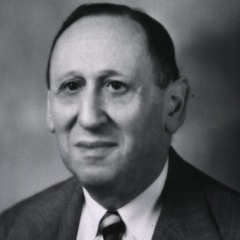
In the labyrinthine corridors of early 20th-century psychiatry, where the shadows of misunderstood minds stretched long and silent, one figure emerged not as a mere observer, but as a pioneer who dared to illuminate the contours of a condition that had long evaded definition. Leo Kanner, a name now etched into the annals of neurodevelopmental history, did not merely describe autism—he redefined the very fabric of human cognition, challenging the prevailing dogmas of his time. His work was not just a clinical breakthrough; it was a seismic shift in perspective, a revelation that would ripple through generations, altering the trajectory of countless lives. To understand autism today is to trace the indelible imprint of Kanner’s intellect, his relentless curiosity, and his unwavering belief in the power of observation. This is the story of a man who saw what others could not, and in doing so, gave voice to a spectrum that had for too long been shrouded in silence.
Born in 1894 in a small town in Austria-Hungary, Kanner’s journey was one of intellectual tenacity and quiet rebellion. Trained in medicine under the tutelage of luminaries like Emil Kraepelin, he honed his skills in the art of psychiatric diagnosis at a time when the field was still in its infancy. Yet, it was not until he emigrated to the United States in 1924 that his true calling would reveal itself. As the first child psychiatrist at Johns Hopkins Hospital, Kanner found himself at the crossroads of a medical frontier, where the mysteries of the developing mind awaited unraveling. His early work on schizophrenia and intellectual disability laid the groundwork for his magnum opus: the delineation of autism as a distinct entity, separate from the broader spectrum of psychiatric disorders.
In 1943, Kanner published a paper that would forever alter the landscape of neurodevelopmental science. Titled “Autistic Disturbances of Affective Contact,” his work introduced the world to a cluster of behaviors so peculiar, so alien to conventional understanding, that they demanded a new lexicon. Kanner described eleven children who exhibited an “extreme autistic aloneness,” a phrase that captured the essence of their profound social detachment. These children, he noted, were not merely shy or introverted; they inhabited a world of their own, indifferent to the emotional cues of others, fixated on routines, and prone to repetitive behaviors. The paper was a clarion call, a challenge to the psychiatric community to recognize that these children were not intellectually deficient, nor were they victims of poor parenting—contrary to the prevailing Freudian interpretations of the time. Instead, Kanner posited, they were grappling with a fundamental difference in how they perceived and interacted with the world.
The implications of Kanner’s discovery were nothing short of revolutionary. For the first time, autism was not dismissed as a form of childhood schizophrenia or a result of maternal neglect, but rather as a distinct neurological condition. His meticulous observations laid the foundation for the modern understanding of autism spectrum disorder (ASD), a term that would later encompass a vast array of experiences and abilities. Yet, Kanner’s work was not without controversy. His emphasis on the “refrigerator mother” theory—a notion that cold, detached parenting contributed to autism—would later be debunked, a stain on his legacy that has since been largely discredited. Nevertheless, his initial insights into the core features of autism—social aloofness, language peculiarities, and insistence on sameness—remain cornerstones of diagnostic criteria today.
The Birth of a New Paradigm: Autism as a Spectrum
Kanner’s early descriptions painted autism as a monolithic entity, a rare and severe condition that manifested in childhood. However, as the decades unfolded, the boundaries of his original definition began to blur. Researchers like Hans Asperger, working independently in Vienna, described a milder form of autism in children with average or above-average intelligence, characterized by social difficulties and intense special interests. This divergence between Kanner’s and Asperger’s work would eventually converge into the modern concept of the autism spectrum, a recognition that autism is not a single, uniform condition but a heterogeneous tapestry of strengths, challenges, and individual differences.
The shift from a rigid, categorical view of autism to a spectrum model was not merely academic—it was transformative. It acknowledged that autism could manifest in myriad ways: from nonverbal individuals with profound intellectual disabilities to highly articulate adults who navigate the world with remarkable precision but struggle with social nuances. This paradigm shift also highlighted the role of sensory sensitivities, a facet of autism that Kanner had only begun to touch upon. Today, we understand that sensory overload—whether to sound, light, or texture—can be as debilitating for some autistic individuals as social missteps are for others. Kanner’s early observations were a seed; the spectrum model allowed it to flourish into a forest of understanding.

The spectrum model also forced a reckoning with the language used to describe autism. Terms like “high-functioning” and “low-functioning” have fallen out of favor, criticized for reducing individuals to a single dimension of ability. Instead, the focus has shifted to the lived experiences of autistic people, their unique ways of thinking, and the supports they need to thrive. This evolution in perspective is a direct legacy of Kanner’s initial challenge to conventional wisdom. By recognizing autism as a spectrum, we have moved closer to a world where differences are not pathologized but celebrated as part of the rich tapestry of human diversity.
The Legacy of Leo Kanner: A Foundation for the Future
Kanner’s contributions extend far beyond his 1943 paper. His later work delved into the genetic and neurological underpinnings of autism, laying the groundwork for contemporary research. He was among the first to suggest that autism might have a biological basis, a radical idea at a time when psychological explanations dominated. His observations of familial patterns in autism hinted at a genetic component, a prescient insight that would be confirmed decades later with the discovery of specific gene mutations associated with ASD.
Yet, Kanner’s legacy is not without its complexities. His early theories on parenting, though later disproven, cast a long shadow that took years to dispel. The “refrigerator mother” hypothesis, which blamed autism on emotional coldness, caused immeasurable harm, leading to misguided therapies and shattered families. It was only in the 1960s and 1970s that researchers like Bernard Rimland and Lorna Wing began to dismantle these myths, replacing them with evidence-based understandings of autism as a neurodevelopmental condition. Kanner himself eventually distanced himself from the parenting theory, but the damage had been done, a reminder of how even the brightest minds can be ensnared by the limitations of their time.
Today, Kanner’s name is synonymous with the birth of autism as a recognized condition. His work paved the way for the Diagnostic and Statistical Manual of Mental Disorders (DSM) to include autism in its third edition in 1980, a milestone that formalized the diagnosis and opened doors to research, support, and advocacy. His influence is evident in every autism awareness campaign, every policy aimed at improving the lives of autistic individuals, and every scientific study that seeks to unravel the mysteries of the spectrum. Yet, his greatest legacy may be the shift in perception he inspired—a world that now recognizes autism not as a tragedy to be cured, but as a difference to be understood.
Autism in the 21st Century: Beyond Kanner’s Shadow
As we stand in the 21st century, the landscape of autism has transformed in ways Kanner could scarcely have imagined. The rise of neurodiversity—a social movement that frames autism as a natural variation of human neurology—has challenged the medical model of disability, advocating instead for acceptance and accommodation. Autistic self-advocates, once a rarity, now lead the conversation, sharing their experiences in blogs, TED Talks, and policy forums. The narrative has shifted from one of deficit to one of difference, from a focus on “fixing” autism to creating environments where autistic individuals can flourish.
This evolution has not been without its tensions. The debate between those who seek medical interventions to “reduce” autistic traits and those who advocate for societal acceptance reflects a deeper philosophical divide. Yet, it is a testament to Kanner’s enduring influence that the conversation continues to evolve. His work was the first step; the journey he set in motion is far from over. Researchers are now exploring the intersection of autism with other conditions, such as epilepsy, ADHD, and intellectual disability, recognizing that the spectrum is not a silo but a web of interconnected experiences. Advances in technology, from brain imaging to genetic sequencing, are providing new insights into the biological roots of autism, offering hope for targeted therapies and supports.
The societal shift toward inclusion has also been profound. Schools are adopting sensory-friendly classrooms, workplaces are embracing neurodiverse hiring practices, and public spaces are becoming more accessible. These changes are not just about accommodating autistic individuals; they are about enriching society as a whole. The unique perspectives of autistic people—whether in art, science, or problem-solving—have proven invaluable, challenging the status quo and driving innovation. Kanner’s early descriptions of autistic children’s intense focus on detail and pattern recognition foreshadowed the strengths that define many autistic adults today.
Yet, challenges remain. Access to diagnosis, support, and services varies widely across the globe, leaving many autistic individuals without the resources they need to thrive. The stigma persists, albeit in subtler forms, and the journey toward true acceptance is ongoing. Kanner’s work was a beginning, not an end. It was a call to action, a challenge to see the world differently. Today, that challenge is more urgent than ever.
In the quiet of his office, surrounded by case notes and medical journals, Leo Kanner must have sensed that he was onto something profound. He could not have foreseen the magnitude of his discovery, the lives it would touch, or the debates it would ignite. But he did see what others could not: that autism was not a flaw to be corrected, but a difference to be understood. His legacy is not just in the papers he wrote or the diagnoses he defined, but in the way he changed how we see the world. Autism is no longer a shadow in the psychiatric annals; it is a vibrant, complex, and essential part of the human experience. And it all began with a man who dared to look closer, to listen harder, and to ask questions that would change everything.












