Autism Spectrum Disorder (ASD) presents a complex tapestry of challenges, where the threads of communication, social interaction, and sensory processing often intertwine in ways that can feel overwhelming. For many families navigating this landscape, the quest for stability and support leads them to an unlikely ally—one that walks on four legs, wags its tail, and offers more than just companionship. Service dogs, meticulously trained to assist individuals with autism, have emerged as transformative figures in this narrative, bridging gaps that traditional therapies sometimes cannot. Their role extends far beyond mere assistance; they become silent guardians, emotional anchors, and catalysts for profound personal growth. Yet, their significance often remains understated, buried beneath the more conventional narratives of medical intervention. What is it about these dogs that captivates our collective imagination? Why do they hold such a fascination, not just as tools of aid, but as symbols of hope and resilience?
The answer lies in the unspoken bond between humans and animals—a bond that transcends language and logic. Service dogs for autism do not merely perform tasks; they redefine the very concept of support. They are living bridges between isolation and connection, between chaos and calm. Their presence in the lives of individuals with autism is not just a practical solution; it is a testament to the power of empathy, intuition, and unconditional acceptance. To understand their impact, we must delve into the multifaceted ways they assist, the science behind their training, and the deeply human stories that underscore their value.
The Unseen Guardians: How Service Dogs Provide Stability
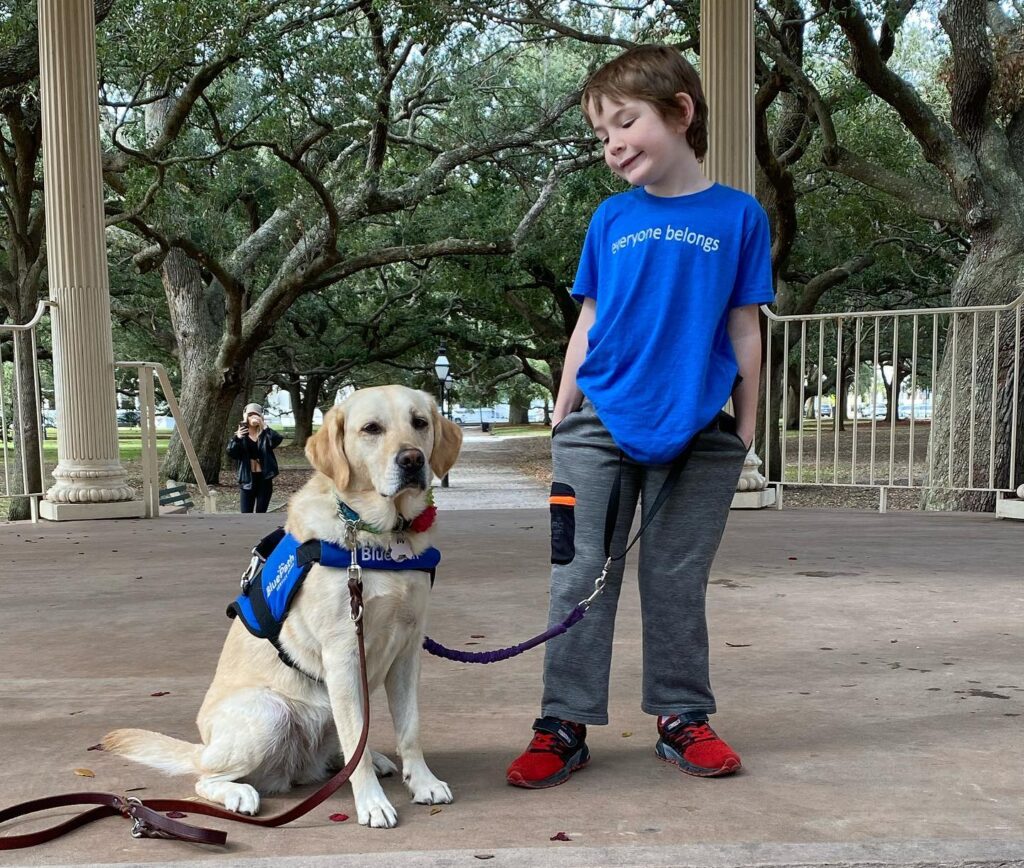
For a child with autism, the world can feel like a labyrinth of unpredictable stimuli—a cacophony of sounds, flickering lights, and overwhelming textures. In these moments, a service dog becomes a sanctuary, a steady presence that grounds them in the present. One of the most critical roles these dogs play is interrupting harmful behaviors, such as self-injury or bolting into dangerous situations. Trained to recognize signs of distress, they use gentle nudges, positioning themselves as a physical barrier, or even retrieving a caregiver when needed. This intervention is not just about preventing harm; it is about restoring a sense of safety in a world that often feels anything but.
Beyond physical intervention, service dogs excel in sensory regulation. Many individuals with autism experience heightened sensitivity to sensory input, which can lead to meltdowns or shutdowns. A dog’s calming presence, their rhythmic breathing, and the warmth of their fur can act as a soothing balm to an overstimulated nervous system. Studies have shown that the act of petting an animal can lower cortisol levels and increase oxytocin, the “bonding hormone,” which helps regulate emotions. In this way, the dog becomes a living biofeedback mechanism, teaching the individual to self-soothe through the simple act of connection.
Their role as social facilitators is equally profound. Children with autism often struggle with social cues, making interactions with peers or strangers a source of anxiety. A service dog, with its inherent approachability, can serve as an icebreaker. Strangers are more likely to engage with a child when a dog is present, creating opportunities for social practice in a low-pressure environment. The dog’s calm demeanor also models appropriate social behavior, subtly teaching the child how to interact with others without the weight of expectation.

The Alchemy of Training: Crafting a Lifeline
The transformation of a puppy into a service dog is nothing short of alchemical. It begins with the selection of candidates—dogs with the right temperament: patient, intuitive, and resilient. Not every dog is suited for this role; it requires an innate ability to read human emotions and a willingness to work without the need for constant praise. Breeds like Golden Retrievers, Labrador Retrievers, and even some smaller breeds like Poodles are often chosen for their adaptability and gentle nature.
The training process is rigorous and tailored to the specific needs of the individual with autism. It starts with basic obedience, but quickly evolves into specialized tasks. For instance, a dog may be trained to track a child who has wandered off, using scent work to locate them before they reach a dangerous area. Others are taught to respond to repetitive behaviors, such as hand-flapping or rocking, by gently interrupting the motion with a paw or nose. Some dogs are even trained to alert caregivers to signs of an impending meltdown, such as changes in breathing or facial expressions, allowing for proactive intervention.
What makes this training so remarkable is its emphasis on intuitive response. Unlike machines or rigid protocols, service dogs operate on a level of emotional intelligence that is difficult to replicate. They learn to read micro-expressions, body language, and even subtle changes in scent that signal distress. This ability to anticipate needs before they are explicitly communicated is what sets them apart from other forms of assistance. It is a reminder that sometimes, the most advanced technology is not a device, but a living, breathing being with the capacity for deep empathy.
The Ripple Effect: Families Transformed
The impact of a service dog extends far beyond the individual with autism. For families, the presence of a dog can alleviate the relentless stress of constant vigilance. Parents who once slept in shifts to prevent nighttime wandering can finally rest, knowing their child is safe. Siblings, who may have felt overlooked in the shadow of their brother’s or sister’s needs, find a new companion and confidant in the dog. The dog becomes a shared responsibility, a source of joy, and a catalyst for family bonding.
Yet, the transformation is not just practical; it is emotional. Many parents describe the dog as a lifeline, a tangible symbol of hope in a journey that often feels isolating. The dog’s unconditional love offers a respite from the frustration and exhaustion that can accompany caregiving. In this way, the service dog becomes a silent partner in the family’s journey, easing not just the challenges of autism, but the emotional toll it takes on everyone involved.
There is also a cultural shift that accompanies the introduction of a service dog. Communities become more aware of autism, and the dog serves as a visual reminder of the diversity of human experience. Strangers who might otherwise stare or make assumptions are often drawn into a conversation, fostering a more inclusive environment. The dog becomes a bridge between the world of autism and the world at large, challenging stereotypes and promoting understanding.
The Deeper Fascination: Why Service Dogs Captivate Us
It is no coincidence that service dogs for autism have become a subject of fascination, not just for those directly affected, but for society at large. Their appeal lies in the paradox they embody: they are both ordinary and extraordinary. On one hand, they are dogs—creatures we have domesticated for millennia, familiar and relatable. On the other, they are highly trained professionals, capable of tasks that seem almost superhuman. This duality taps into a deeper human curiosity: the intersection of the natural and the cultivated, the instinctual and the learned.
Their role also challenges our perceptions of disability and assistance. In a world that often prioritizes independence above all else, service dogs remind us that interdependence is not a weakness, but a strength. They show us that support does not have to be clinical or impersonal; it can be warm, tactile, and alive. This challenges the stigma that often surrounds reliance on assistance, whether for autism or other conditions.
There is also an element of awe in how these dogs operate. Their ability to understand and respond to human emotions without language is nothing short of magical. It invites us to reconsider the boundaries between species, to marvel at the ways in which animals can enrich our lives in ways we are only beginning to comprehend. In a time when technology often feels cold and distant, the service dog represents a return to a more primal, more human form of connection.
A Future of Possibilities
The field of autism service dogs is still evolving, with ongoing research exploring new ways these animals can assist. Some programs are now training dogs to recognize and respond to seizures or anxiety attacks, expanding their role beyond traditional boundaries. Others are exploring the use of dogs in educational settings, where their presence can help children with autism focus and engage more effectively in learning.
Yet, despite these advancements, access to service dogs remains a challenge for many families. The cost of training and maintaining a service dog can be prohibitive, and waitlists for reputable organizations are often years long. Advocacy for increased funding and awareness is crucial to ensuring that more families can benefit from this life-changing support. The goal is not just to provide dogs, but to foster a culture where their value is recognized and their presence normalized.
The story of autism service dogs is, at its core, a story of resilience and connection. It is a testament to the power of empathy, the unbreakable bond between humans and animals, and the transformative potential of support. In a world that often feels fragmented, these dogs remind us that healing can come in the most unexpected forms—through a wagging tail, a gentle nudge, or a silent presence that says, “I am here. You are not alone.”