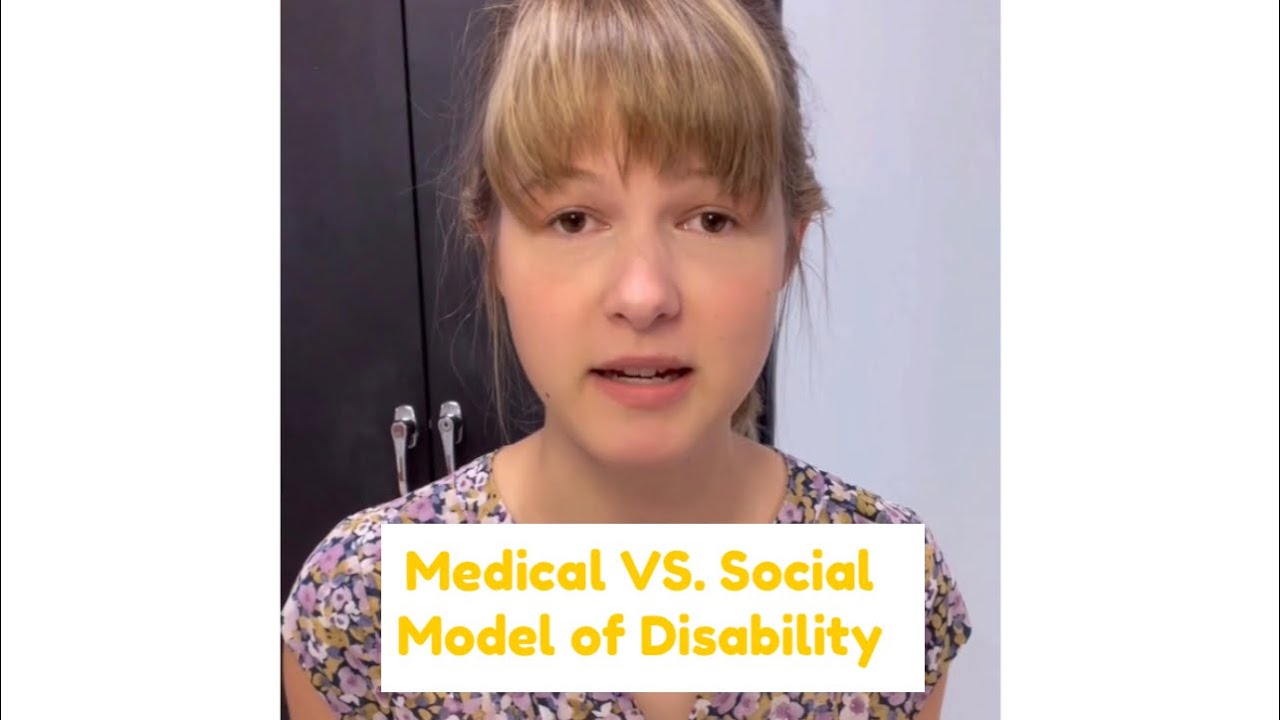
The human mind is a vast, uncharted archipelago, where each island represents a unique way of perceiving the world. For those who navigate the currents of autism, the terrain is often misunderstood—either as a storm to be weathered or as a landscape to be embraced. The tension between the medical and social models of disability offers a lens through which we can examine this dichotomy. One perspective seeks to “fix” the islands; the other celebrates their existence. To truly grasp the essence of autism, we must explore both models, not as opposing forces, but as complementary narratives that shape how society perceives and interacts with neurodivergence.
The Medical Model: Autism as a Puzzle to Solve
Imagine autism as a rare, intricate mechanism, its gears misaligned and its functions erratic. The medical model approaches this complexity with the precision of a watchmaker, dissecting each component to identify flaws and prescribe remedies. In this framework, autism is not merely a difference but a deviation—a condition to be diagnosed, treated, and, ideally, corrected. Symptoms such as social communication challenges or sensory sensitivities are framed as deficits, obstacles to be overcome through therapies, medications, or behavioral interventions.
This model is rooted in a long-standing tradition of pathologizing human variation. It draws from the language of pathology, where terms like “disorder,” “impairment,” and “deficit” dominate the discourse. The goal is not just understanding but normalization. Autism, in this view, is akin to a software bug—a glitch that disrupts the smooth operation of the human system. The focus is on restoring functionality, often at the expense of the individual’s natural inclinations. While this approach can provide critical support—such as speech therapy or occupational interventions—it risks overlooking the inherent value of autistic experiences.
Consider the metaphor of a garden. The medical model sees a plot overrun by weeds, where the only path to beauty is through aggressive pruning and chemical treatment. The gardener’s tools are sharp, their intentions noble, but the garden’s original ecosystem may never fully recover. Similarly, the medical model’s interventions, though well-intentioned, can sometimes strip away the very traits that make autistic individuals unique. The challenge lies in balancing necessary support with the preservation of identity.
The Social Model: Autism as a Cultural Tapestry
Now, shift your gaze to a different landscape, where autism is not a flaw but a feature—a vibrant thread woven into the fabric of human diversity. The social model of disability flips the script, arguing that the barriers autistic individuals face are not inherent to their condition but are constructed by society’s rigid expectations. In this narrative, autism is not a puzzle to solve but a perspective to honor. The “disability” lies not in the individual but in the environment that fails to accommodate their needs.
Picture a grand ballroom where the music is too loud, the lights too bright, and the dance floor too crowded. For neurotypical guests, the evening flows effortlessly. But for someone with sensory sensitivities, the same space is a cacophony of discomfort. The social model suggests that the solution isn’t to force the guest to endure the noise but to adjust the lighting, lower the volume, or provide a quiet room. The disability isn’t in the guest’s ears but in the ballroom’s design. Similarly, autistic individuals are not inherently disabled by their traits; they are disabled by a world that refuses to adapt.
This model champions accessibility, inclusion, and the celebration of differences. It asks society to bend, not the individual. Workplaces that offer flexible schedules, schools that embrace alternative communication methods, and communities that foster neurodiversity are all manifestations of this philosophy. The social model doesn’t deny the challenges autistic people face; it reframes them as shared responsibilities. The goal is not to change the autistic person but to change the world around them.
Metaphorically, the social model is like a river that carves its own path through the landscape. Instead of forcing the river to conform to human-made channels, the model advocates for bridges, dams, and diversions that allow the river to flow naturally. The river’s course is not a problem to be solved but a force to be reckoned with—a reminder that diversity is not a bug but a feature of the natural world.
The Intersection: Where Models Collide and Converge
The divide between the medical and social models is not a chasm but a spectrum, where the two perspectives often overlap and inform each other. No autistic person exists in a vacuum, untouched by the need for support or the desire for acceptance. The most nuanced approach recognizes that both models have merit, depending on the context and the individual’s needs.
Consider the story of a nonverbal autistic child who struggles with severe anxiety. The medical model might prioritize speech therapy and anxiety medication to help the child navigate a neurotypical world. Meanwhile, the social model might advocate for augmentative and alternative communication (AAC) devices and sensory-friendly environments to reduce the child’s distress. The ideal outcome is not an either/or scenario but a synthesis—a tailored approach that addresses both the child’s challenges and the societal barriers they face.
This intersection is where the most meaningful progress occurs. The medical model provides the tools for survival; the social model offers the space for thriving. Together, they create a holistic framework that honors both the individual’s needs and their right to exist as they are. The key is flexibility, empathy, and a willingness to listen to autistic voices themselves. After all, who better to guide us than those who live the experience?
Think of this intersection as a crossroads where two rivers merge. The waters may swirl and clash, but their union creates a force greater than either could achieve alone. The medical model’s currents bring structure and support, while the social model’s tides foster connection and belonging. The result is a dynamic, ever-evolving ecosystem where autistic individuals can find their place in the world.
The Metaphor of the Kaleidoscope
To encapsulate the duality of these models, imagine a kaleidoscope—a tube filled with colored glass and mirrors. When you turn it, the fragments rearrange themselves into endless patterns, each one unique yet interconnected. The medical model is like the hand that holds the kaleidoscope, adjusting the fragments to create a specific image. The social model is the light that illuminates the fragments, revealing their beauty and complexity. Neither is more important than the other; both are essential to the final spectacle.
Autism, like the kaleidoscope, is not a static entity but a dynamic interplay of traits, challenges, and strengths. The medical model helps us see the individual pieces, while the social model allows us to appreciate the whole. The goal is not to force the kaleidoscope into a single, predictable pattern but to marvel at the infinite possibilities it presents. In this light, autism is not a problem to be solved but a phenomenon to be explored—a testament to the richness of human diversity.
The journey through the medical and social models of autism is not a linear path but a spiral, where each turn brings new insights and deeper understanding. It challenges us to question our assumptions, to listen more closely, and to embrace the complexity of neurodivergence. Autism is not a monolith but a mosaic, and the models we use to understand it are merely tools to help us see its beauty more clearly. The true measure of progress lies not in how much we change autistic individuals but in how much we change ourselves to meet them where they are.