Autism spectrum disorder (ASD) manifests uniquely in women, diverging significantly from the traditional clinical presentations often observed in men. One of the most compelling and nuanced phenomena contributing to this divergence is the concept of masking. Masking, a multifaceted coping mechanism, is increasingly recognized as a pivotal factor in why autism frequently remains undiagnosed or is diagnosed later in life for many women. This exploration delves into the complex dynamics of masking among women with autism, examining its psychological underpinnings, societal drivers, and the challenges it presents in both diagnosis and daily living.
The Intricacies of Masking: Definition and Forms
Masking, sometimes referred to as camouflaging, encompasses conscious and unconscious efforts by autistic individuals to conceal behaviors, traits, and emotional responses that may be socially stigmatized or misunderstood. For women on the spectrum, this involves a sophisticated repertoire of social mimicry and behavioral adjustments aimed at blending in with neurotypical peers. Masking can manifest in various forms, from imitating social cues and suppressing natural self-stimulatory behaviors to rehearsing conversations and stabilizing facial expressions.
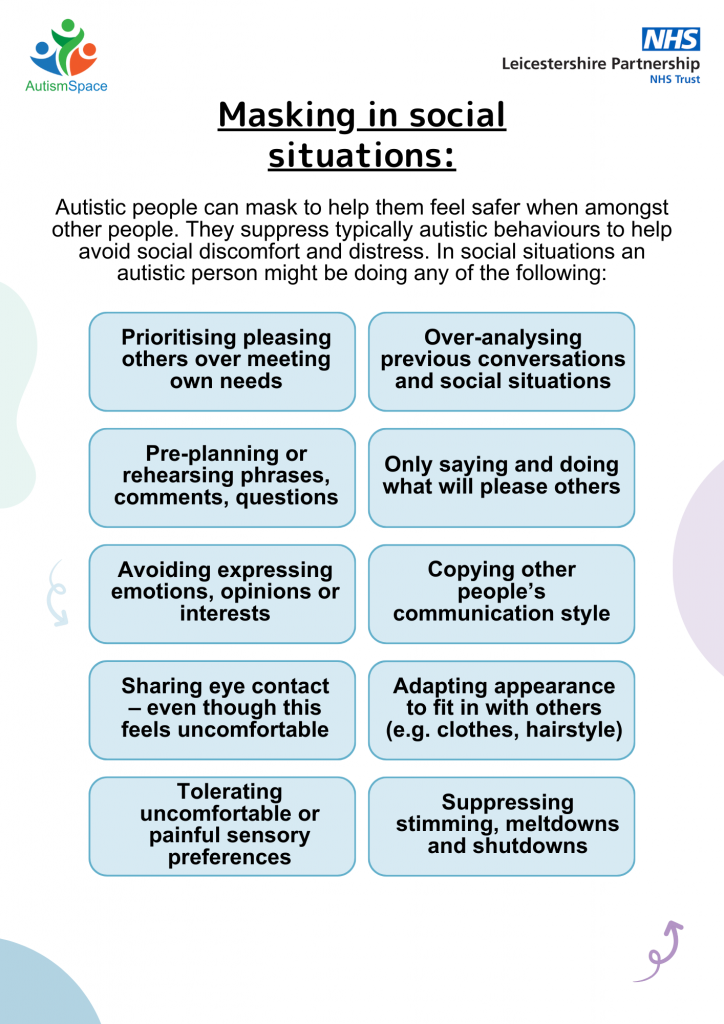
These adaptations are not merely superficial; they often require immense psychological exertion. The mental energy devoted to maintaining a facade can lead to heightened anxiety, emotional exhaustion, and even a diminished sense of identity over time.
Societal Expectations and Gender Norms: The Root Causes of Masking in Women
Historically, gender roles have imposed stringent social expectations on women, emphasizing attributes such as empathy, sociability, and emotional expressiveness. Neurodivergence, which may challenge these norms, often compels women to mask more intensely compared to men. Women’s social conditioning encourages them to develop acute observational skills early in life, enabling them to imitate and internalize social scripts.
This social pressure creates a paradox: while masking allows autistic women access to certain social spheres, it simultaneously obscures their authentic neurological identity. Consequently, the dissonance between internal experience and external performance can lead to profound psychological distress.
The Diagnostic Dilemma: How Masking Obscures Recognition of Autism
The clinical criteria and diagnostic frameworks for autism have historically been based on predominantly male-centric research cohorts. As a result, traditional diagnostic tools often fail to capture the subtleties of autism presentations enriched by masking strategies. Women who mask successfully may not exhibit the overt behaviors conventionally associated with autism, such as repetitive movements or communication challenges in clinical settings.

This incongruence often leads to misdiagnoses, delayed diagnoses, or complete omission of an autism diagnosis. Instead, women might receive alternative or co-occurring diagnoses such as anxiety disorders, depression, or borderline personality disorder, which further complicate their journey toward appropriate support.
Psychological Consequences of Prolonged Masking
While masking serves as a protective façade in social interactions, the relentless effort to sustain it exacts a substantial psychological toll. Over time, women who mask may experience an erosion of self-awareness and increased risk of mental health conditions. The phenomenon known as “autistic burnout” emerges when the cumulative strain of masking leads to overwhelming fatigue, cognitive impairment, and sensory hypersensitivity.
Moreover, the internalization of societal rejection and the suppression of authentic behaviors can foster feelings of isolation, depression, and low self-esteem. Many women describe the experience of living behind a mask as a double-edged sword—providing momentary relief but deepening long-term identity confusion.
Unmasking: Towards Authenticity and Acceptance
The movement toward unmasking and self-acceptance is growing within the autistic community, especially amongst women advocating for broader recognition of neurodiverse identities. Unmasking involves gradually relinquishing the compulsion to conform, acknowledging individual differences, and seeking environments that offer psychological safety and understanding.
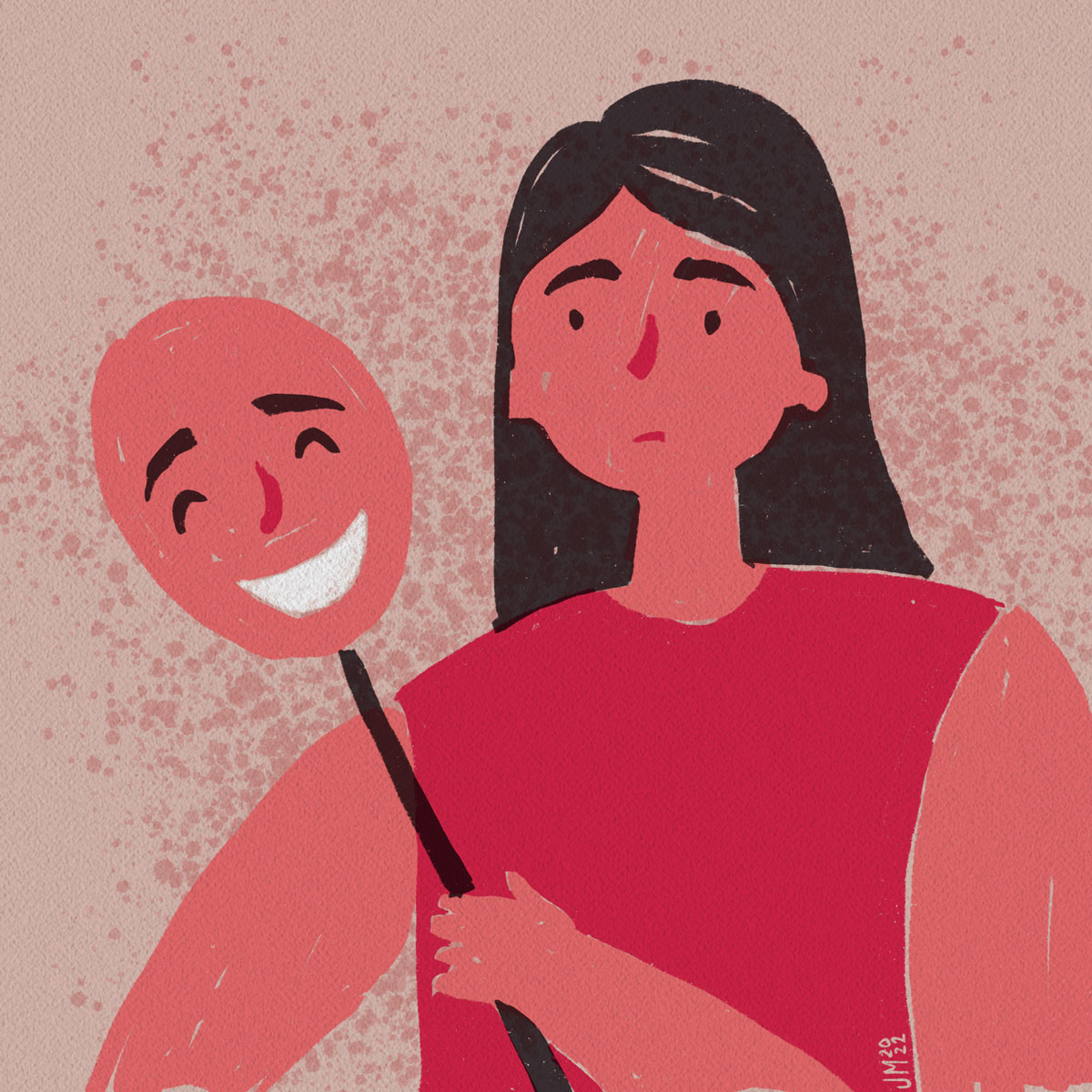
Promoting awareness and educating clinicians, educators, and society at large about the nuanced manifestations of autism in women is critical. Emphasizing personalized support strategies that validate lived experiences and encourage authentic self-expression can improve overall well-being and reduce the detrimental effects of prolonged masking.
Conclusion: Reframing Autism Recognition and Support in Women
Understanding masking as a fundamental aspect of autism in women necessitates a paradigm shift in diagnosis, support, and societal attitudes. Recognizing the complex interplay between gender expectations and neurodivergent expression opens avenues for more inclusive diagnostic criteria and empathetic therapeutic approaches. It also underscores the importance of creating spaces where autistic women can exist freely without the burden of masking.
Ultimately, dismantling the invisibility of women on the spectrum and honoring their authentic experiences will lead to richer, more accurate representations of autism. This recognition fosters empowerment, enabling women to embrace their identities with resilience and pride.