
Understanding the multifaceted spectrum of autism requires a nuanced appreciation of how its signs manifest and evolve from infancy through adulthood. Each stage of life presents distinctive indicators, reflecting the complex interplay between neurodevelopment and environmental factors. This article embarks on a comprehensive exploration of autism signs delineated by age, offering readers insightful perspectives into this developmental condition.
Early Infancy: Subtle Beginnings of Autism
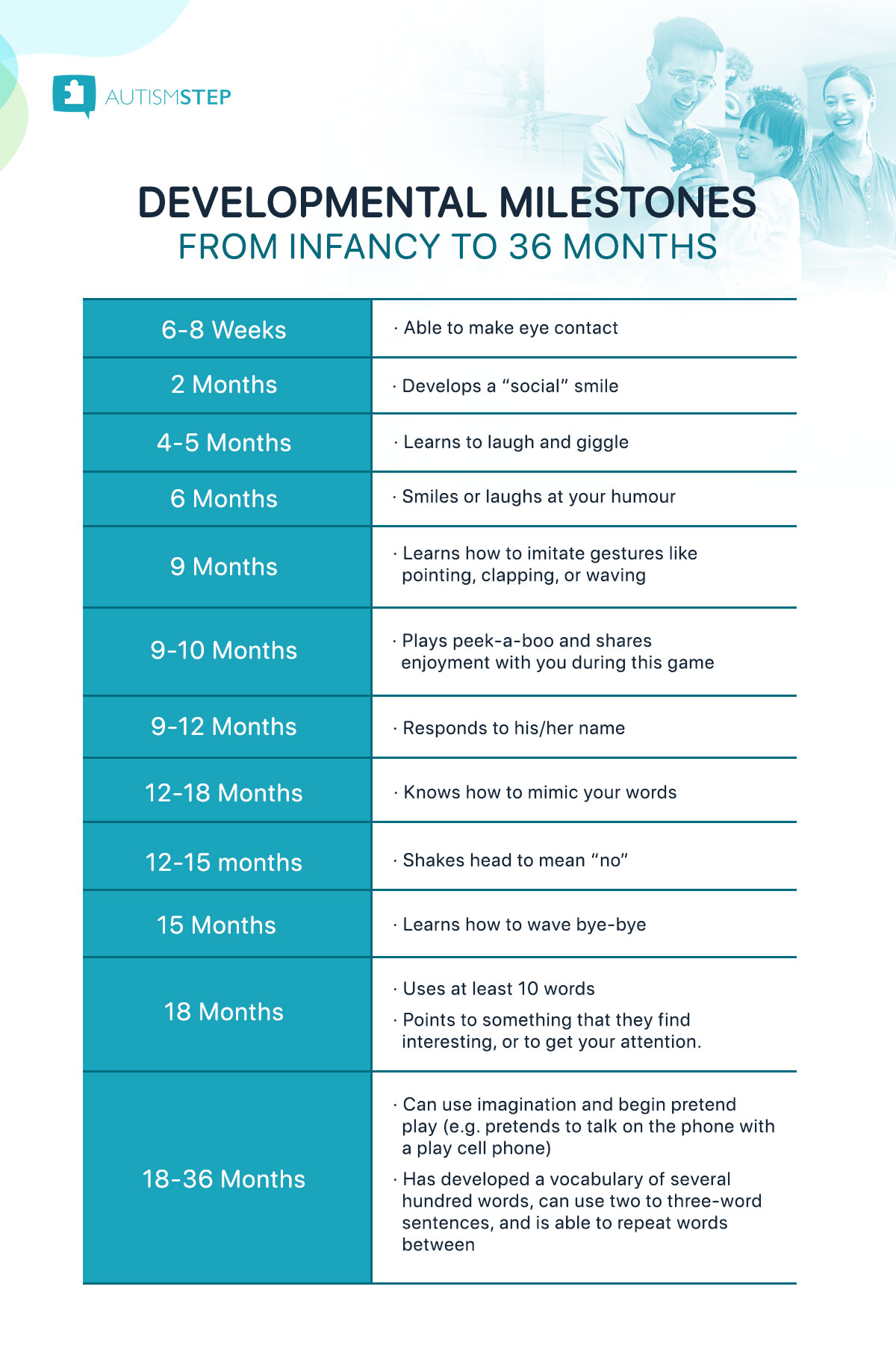
The earliest signs of autism can often be elusive, yet their timely recognition is paramount for early intervention. In infancy, typically ranging from birth to 12 months, indicators primarily revolve around social communication and sensory engagement.
One may observe diminished eye contact or an apparent lack of interest in faces. Unlike their neurotypical counterparts, infants with autism might not consistently respond to their name being called or exhibit the typical social smile. Additionally, these infants could display atypical sensory responses, such as hypersensitivity to sounds or tactile stimuli, or conversely, seem unusually indifferent to pain or temperature.
Motor development may also deviate from expected trajectories. Delays in milestones like rolling over, sitting without support, or purposeful reaching signal potential areas of concern. Importantly, repetitive movements such as hand flapping or finger flicking can sometimes be noted even in this early phase.
Toddlerhood: Expanding Communication and Behavioral Traits
Between 1 and 3 years of age, the landscape of autism signs becomes more pronounced, particularly in areas of language acquisition, social interaction, and play behaviors. During this critical period of rapid development, deviations from typical patterns can stand out with greater clarity.
Language delays are among the most frequently observed signs. Some toddlers may remain nonverbal, while others exhibit echolalia, repeating words or phrases without functional context. The deficit in joint attention—where a child fails to share interest in objects or events with caregivers—is a hallmark feature in this age group.
Social reciprocity challenges surface prominently. Many toddlers with autism might avoid physical contact, show minimal interest in peer play, or prefer solitary activities. Behavioral rigidity begins to emerge, with insistence on sameness, ritualistic routines, and distress when routines are disrupted.
Play patterns are often atypical. Instead of imaginative or symbolic play, toddlers may engage in repetitive actions such as lining up toys or fixating on parts of objects rather than the object as a whole.
Early Childhood: Complexity of Social and Cognitive Challenges
For children aged 3 to 6, autism-related signs intensify and diversify, intertwining social communication deficits with cognitive and emotional challenges. This phase often marks the beginning of formal education, making identification and accommodation critical.
Conversational difficulties become evident. Many children struggle with back-and-forth dialogue, interpreting figurative language, or understanding social cues such as body language and facial expressions. Difficulty in perspective-taking, or theory of mind, is characteristic, impacting empathy and peer relationships.
Restricted interests may dominate the child’s activities, sometimes becoming obsessive passions. Cognitive rigidity can be observed in resistance to change and a preference for predictable routines. Sensory processing issues remain pervasive, with children demonstrating either heightened or diminished sensory responses.
Motor abnormalities including clumsiness or atypical gait patterns may be noticed. Emotional regulation often poses significant challenges, manifesting as meltdowns or tantrums disproportionate to triggers.
Adolescence: Navigating Social Complexities and Identity
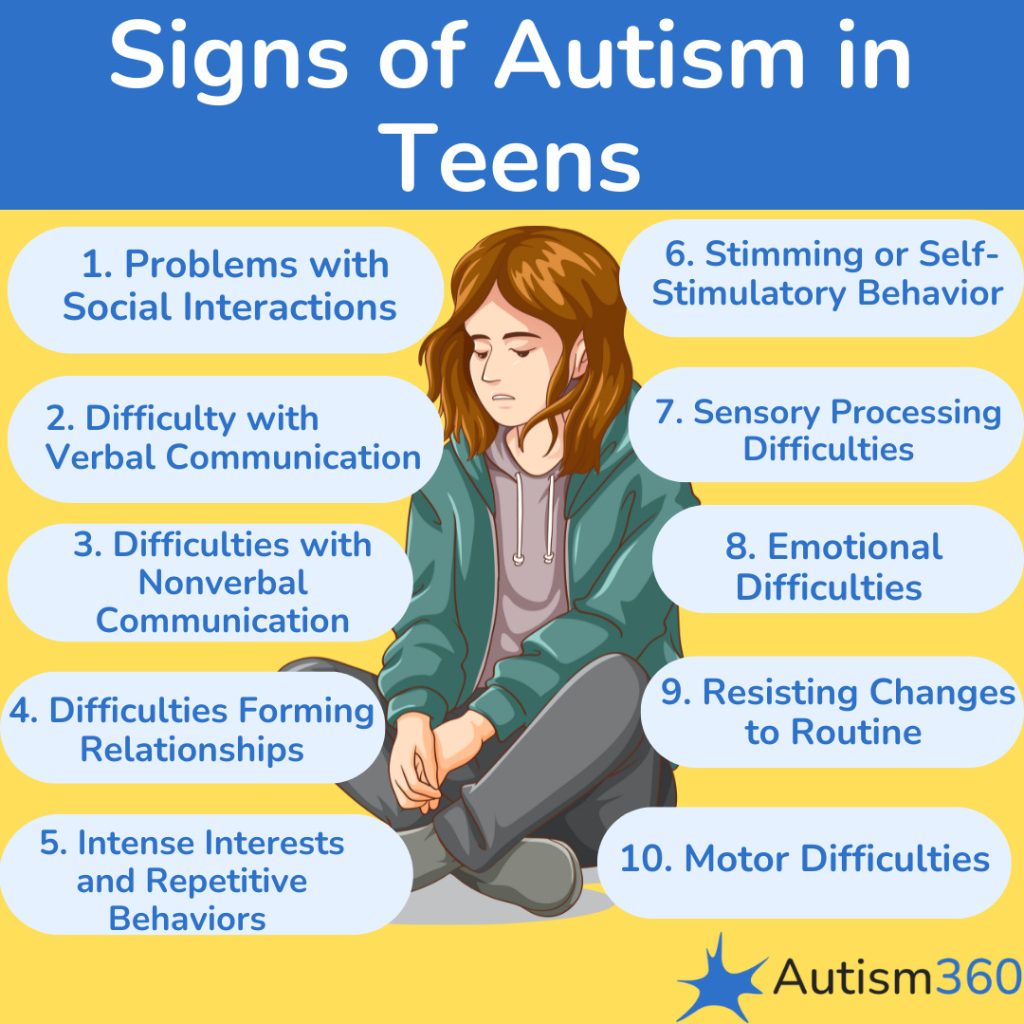
The adolescent years introduce a labyrinth of social complexities, identity exploration, and increased expectations for independence, all of which can heighten the challenges faced by individuals with autism.
Social communication deficits become more nuanced and subtle. While some adolescents might have developed functional language skills, pragmatic language difficulties persist, hindering effective peer interactions. Nonverbal communication impairments, such as limited use of gestures or atypical eye contact, continue to undermine social integration.
Social anxiety and feelings of isolation are common, as the intricacies of adolescent social hierarchies and romantic interests require advanced social cognition. Structured routines may still provide comfort, and disruptions can provoke significant distress.
Repetitive behaviors might evolve, sometimes being channeled into hobbies or special interests that provide solace but can also lead to social exclusion if not balanced appropriately. Executive functioning deficits including difficulties with planning, organization, and impulse control increase in prominence during this life stage.
Adulthood: Persistence and Adaptation of Autism Signs
Autism does not dissipate with age; rather, its manifestations persist and adapt throughout adulthood. Many adults develop coping strategies that mask certain signs, rendering diagnosis more challenging. However, core difficulties often remain.
Social communication challenges continue to influence relationships, workplace dynamics, and independent living. Difficulties with understanding subtleties in conversation, managing social boundaries, or interpreting humor and sarcasm may pervade daily interactions.
Employment can pose significant hurdles due to sensory sensitivities, need for routine, and challenges with multitasking or adapting to new environments. Mental health concerns such as anxiety, depression, and sensory overload are prevalent in autistic adults.
Nevertheless, many adults on the spectrum cultivate profound expertise in specialized interests, exceptional attention to detail, and unique problem-solving skills. Emphasizing strengths alongside accommodations can lead to fulfilling personal and professional lives.

Conclusion: Embracing Awareness Across the Lifespan
Autism is a lifelong neurodevelopmental condition whose signs evolve through infancy, childhood, adolescence, and adulthood. Early recognition facilitates timely interventions that can substantially improve outcomes. Each stage presents its own constellation of behaviors, challenges, and strengths, underscoring the importance of individualized understanding and support.
The continuum of autism signs reflects the diverse experiences of individuals on the spectrum. Embracing this complexity not only enhances awareness but also fosters empathy and inclusivity, enabling society to better accommodate and celebrate neurodiversity at every age.












