
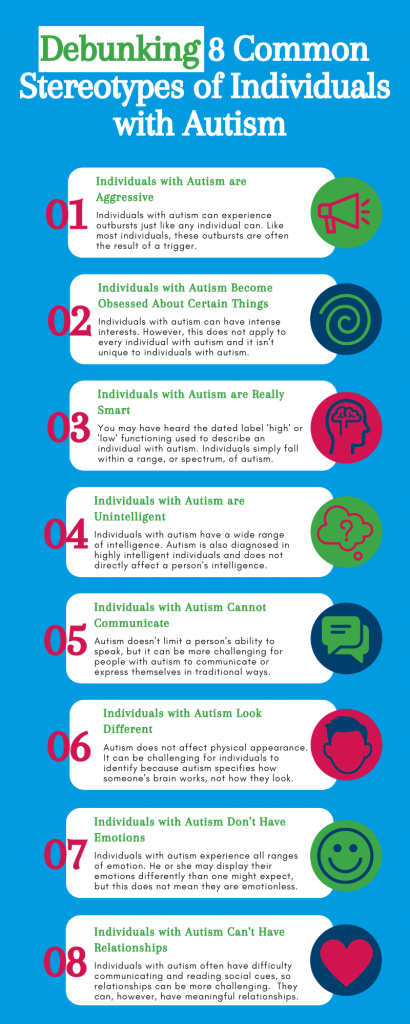
In a world where misconceptions often masquerade as truths, the act of laughing at stereotypes can be a radical form of rebellion. Autism, a neurodevelopmental condition as diverse as the individuals it describes, has long been shackled by reductive caricatures—flawed archetypes that distort reality and stifle understanding. Yet, what if we wielded satire as a scalpel, slicing through these illusions with humor’s keen edge? Satire, in its most potent form, doesn’t just mock; it illuminates, forcing us to confront the absurdity of our own assumptions. By poking fun at the stereotypes that have dogged autism for decades, we don’t just entertain—we redefine perception, inviting curiosity where there was once only ignorance. This is not about diminishing the gravity of lived experiences but about dismantling the barriers of prejudice through laughter’s disarming power.

The Myth of the “Rain Man” Genius: When Savantism Becomes a Circus Act
Few stereotypes are as enduring—or as reductive—as the notion that autism is synonymous with prodigious intellect, a trope immortalized by films like *Rain Man*. The idea that every autistic individual possesses an encyclopedic memory or an innate mastery of mathematics is not just a myth; it’s a disservice that erases the vast spectrum of abilities and challenges that define autism. Satire thrives on exaggeration, and this particular stereotype is ripe for it. Imagine a world where autistic people are constantly quizzed on obscure trivia at parties, their social interactions reduced to a game of “Guess the Genius.” The absurdity of this scenario highlights the flaw in the original assumption: autism is not a one-size-fits-all ticket to brilliance. By lampooning the savant myth, we strip it of its glamour, revealing it for what it is—a lazy caricature that ignores the diversity of human cognition. The real punchline? Most autistic individuals, like most neurotypical people, are neither savants nor dullards; they are simply people, with their own unique strengths and struggles.
Social Awkwardness as a Punchline: The Comedy of Misread Cues
Autistic individuals are often caricatured as socially inept, their interactions reduced to a series of cringe-worthy blunders. The stereotype paints a picture of someone who misses sarcasm, misreads facial expressions, or speaks in a monotone that could rival a GPS system. Satire can turn this trope on its head by exaggerating it to absurdity. Picture a sitcom where an autistic character’s literal interpretation of a sarcastic remark (“Oh great, another meeting that could’ve been an email”) leads to a room of neurotypical colleagues gasping in horror, as if they’ve witnessed a social felony. The humor lies in the contrast between the character’s perceived “cluelessness” and the equally arbitrary rules of neurotypical social conduct. Yet, beneath the laughter, a deeper truth emerges: social norms are not universal laws but learned behaviors, and autistic individuals are simply navigating a different set of guidelines. By mocking the stereotype, we expose its arbitrariness, inviting empathy rather than judgment.

The “Emotionless Robot” Fallacy: When Empathy Takes a Backseat
Another pervasive stereotype is the idea that autistic people lack empathy, a claim that reduces emotional depth to a binary of presence or absence. This myth is particularly insidious because it frames autistic individuals as cold, unfeeling entities, incapable of the nuanced emotional responses that define human connection. Satire can dismantle this notion by flipping the script. Imagine a world where autistic people are portrayed as the only ones with the courage to call out hypocrisy in social circles, their blunt honesty serving as a mirror to the performative empathy of others. The humor arises from the irony: if autistic individuals are “emotionless,” why do they so often bear the brunt of emotional labor in relationships? By exaggerating this stereotype, we reveal its hollowness, showing that empathy is not a monolith but a spectrum of expressions. The real joke is on those who cling to the myth, for it is they who are truly missing the point.
Stimming as a “Disorder”: The Absurdity of Pathologizing Self-Soothing
Stimming—self-stimulatory behaviors like hand-flapping, rocking, or repeating phrases—is often framed as a “disorder” in need of correction. This perspective pathologizes behaviors that are not only harmless but often serve as vital coping mechanisms for autistic individuals. Satire can expose the absurdity of this viewpoint by presenting it in its most extreme form. Picture a dystopian workplace where employees are fined for tapping their feet, humming, or doodling, with managers insisting that such behaviors “disrupt productivity.” The humor lies in the exaggeration, but the underlying critique is sharp: who decides what behaviors are “acceptable,” and why are autistic individuals disproportionately targeted for behaviors that are simply part of the human experience? By mocking the idea that stimming is a flaw, we challenge the very notion of “normalcy,” celebrating instead the rich tapestry of human expression.
The “Invisible Disability” Paradox: When Stereotypes Demand Visibility
Autism is often an invisible disability, a fact that complicates the public’s understanding of its realities. Yet, stereotypes frequently demand that autistic individuals perform their differences in visible, often exaggerated ways to be taken seriously. Satire can highlight this paradox by imagining a world where autistic people are required to wear neon signs proclaiming their diagnosis at all times, lest they be accused of “faking” their struggles. The absurdity of this scenario underscores a critical point: autism is not a costume to be worn for the benefit of others. By exaggerating the demand for performative visibility, we expose the hypocrisy of a society that both fetishizes and fears difference. The real punchline? Autistic individuals deserve to exist without the burden of proving their humanity.
The Danger of Satire: When Laughter Crosses the Line
While satire can be a powerful tool for dismantling stereotypes, it is not without its risks. The line between humor and harm is thin, and satire that reinforces negative tropes—even unintentionally—can do more damage than good. For example, mocking the idea that autistic people are “lazy” or “unmotivated” could inadvertently validate harmful stereotypes about work ethic. The key to effective satire lies in its intent: it should challenge the status quo, not reinforce it. By focusing on the absurdity of stereotypes rather than the individuals they target, satire can serve as a catalyst for change. The goal is not to belittle but to provoke thought, to make the audience question why certain jokes are funny in the first place. When wielded responsibly, satire becomes a mirror, reflecting society’s prejudices back at it with a wink and a nudge.
A Shift in Perspective: From Laughter to Empathy
The ultimate promise of satire is not just to make us laugh but to make us think. By poking fun at autism stereotypes, we invite a shift in perspective—one that moves beyond reductive caricatures to embrace the complexity of human experience. Satire doesn’t offer easy answers; it asks difficult questions. Why do we cling to stereotypes? What fears do they reveal about our own biases? And how can we do better? The answers may not come easily, but the laughter that precedes them is a start. It disarms, it connects, and most importantly, it opens the door to curiosity. In a world where misinformation spreads faster than truth, satire is not just a tool for entertainment but a weapon against ignorance. It reminds us that the most powerful jokes are the ones that make us see the world—and ourselves—in a new light.
So the next time you encounter an autism stereotype, ask yourself: Is it funny, or is it just lazy? And if it’s the latter, perhaps it’s time to laugh—not at the people it targets, but at the absurdity of the stereotype itself. After all, the best satire doesn’t just make us chuckle; it makes us care.












