Autism spectrum disorder (ASD) is a complex, multifaceted mosaic—a kaleidoscope of behaviors, perceptions, and interactions that challenge our understanding of human neurodiversity. Beneath its intricate surface lies a tantalizing question that has both baffled and inspired scientists for decades: Is autism genetic? To unravel this enigma, one must journey deep into the labyrinth of genetic science, exploring the interplay of heredity, environment, and molecular biology that shapes the neurodevelopmental architecture of those on the spectrum.
The Genetic Tapestry of Autism: A Tangle of Threads
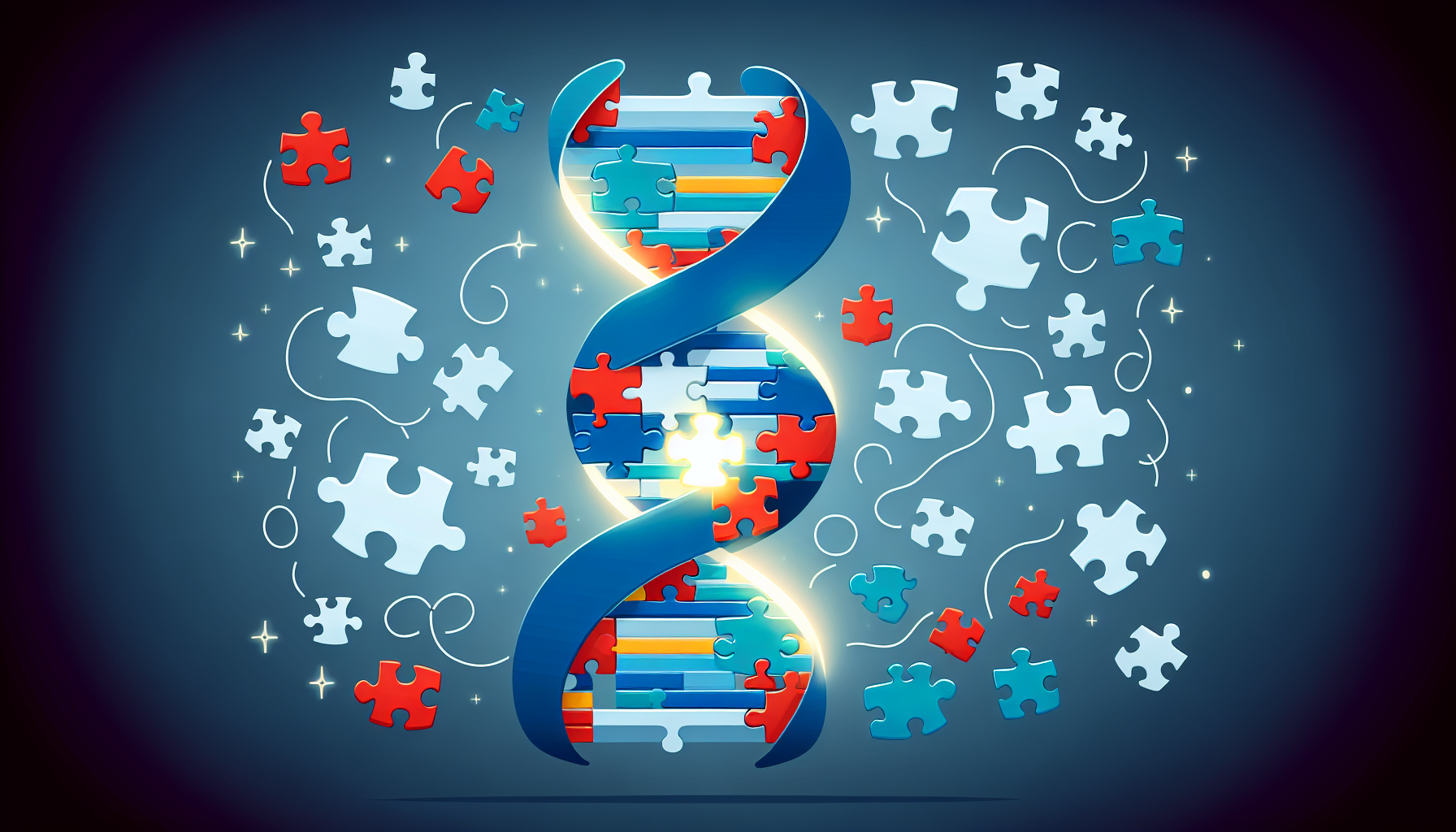
At its core, genetics is often likened to a tapestry, composed of countless interconnected threads weaving together the story of life. When it comes to autism, these threads multiply and intertwine with a complexity that transcends straightforward inheritance. It is not a narrative of single-gene causality but rather a constellation of genetic variants—ranging from common to rare mutations—that together contribute to the spectrum’s diverse manifestations.
Evidence from family and twin studies illuminates this richly woven pattern. Concordance rates for autism among identical twins, who share nearly identical DNA, are significantly higher than among fraternal twins or siblings, underscoring the pronounced influence of genetic factors. However, the puzzle is far from complete. Non-identical twins and siblings also display increased risk compared to the general population, hinting at a heritable component interlaced with environmental nuances.

Polygenic Complexity: Orchestrating a Genetic Symphony
To appreciate the genetic architecture of autism, one must envision it as a symphony where innumerable instruments—genes—each play a note. Some carry stronger melodies, others contribute subtle harmonies, and still others modulate the tempo. Recent advances in genome-wide association studies (GWAS) have identified hundreds of loci linked to autism, underscoring its polygenic nature. This means no single genetic variant dictates the presence of autism; instead, a complex interplay of many subtle genetic influences shapes susceptibility.
Rare de novo mutations—those that occur spontaneously and are not inherited from parents—add another layer of intrigue. These mutations often impact genes critical for synaptic function and neural connectivity, fundamental for the brain’s intricate communication network. Their sporadic emergence often explains cases where no family history of autism exists, illuminating new genetic territories in this expansive landscape.
Epigenetics: The Genetic Conductor Beyond DNA
Genes alone do not tell the full story. Beyond the sequence of nucleotides lies the realm of epigenetics—the alterations in gene expression modulated not by DNA changes but by chemical modifications and environmental cues. Epigenetic mechanisms act as conductors in the symphony of genetic expression, determining which genes are turned on or off during critical developmental windows.
Factors such as prenatal stress, maternal nutrition, exposure to toxins, and even paternal age can influence epigenetic markers. These modifications may sway neural development in subtle yet consequential ways, harmonizing with the underlying genetic predispositions to culminate in autism’s characteristic behavioral patterns. This dual influence exemplifies how genes and environment engage in a perpetual dialogue, guiding neurodivergent development.
Neurodevelopmental Pathways and the Genetic Compass
Understanding how specific genetic variations influence autism necessitates navigating the brain’s developmental atlas. Many autism-associated genes converge on pathways that regulate synapse formation, neuronal migration, and neuroplasticity. Alterations in these pathways can disrupt the brain’s wiring patterns, leading to the atypical connectivity observed in individuals on the spectrum.
This neurobiological mapping defines autism not merely as a disorder but as a variation in the cognitive compass—a unique configuration of neural pathways guiding perception, learning, and social interaction. Decoding the genetic underpinnings offers a panoramic view of these pathways, allowing for the emergence of tailored therapies that address the fundamental biology rather than purely symptomatic manifestations.
Beyond Borders: Environmental Interplay and Genetic Vulnerability
While the genetic blueprint provides a foundational script, environment writes in its margins, shading the contours of autism’s expression. Prenatal exposures—ranging from maternal infections to chemical agents—interact with genetic vulnerabilities to modulate risk. No single environmental factor operates in isolation; rather, a mosaic of influences coalesces during sensitive periods of brain development.
The emerging field of gene-environment interactions accentuates this intricate dance, revealing how environmental contexts may amplify or mitigate genetic predispositions. For example, identical genetic variants might manifest differently depending on epigenetic factors shaped by lifestyle, diet, or medical history. This dynamic interplay underscores the necessity of holistic approaches to autism research and intervention, integrating both inherited and extrinsic determinants.
The Promise and Perils of Genetic Insights
The accelerating pace of genetic research heralds unprecedented promise for early diagnosis, personalized interventions, and novel therapeutics. Genetic screening and sequencing technologies now enable the identification of risk markers even before behavioral symptoms surface, facilitating proactive support tailored to an individual’s genetic profile.
Yet, this burgeoning knowledge must be approached with measured reverence. The genetics of autism embodies profound complexity and profound responsibility. Ethical considerations arise around genetic testing, reproductive choices, and the potential stigmatization of neurodiversity. The narrative must pivot from deficit-focused frameworks toward embracing the unique strengths and contributions of autistic individuals.
Conclusion: Embracing the Genetic Kaleidoscope
The question “Is autism genetic?” illuminates a vast scientific terrain where certainty is intertwined with mystery. Genetic factors undoubtedly cast long shadows over autism’s developmental trajectory, but these shadows are nuanced, multifaceted, and interlaced with environmental and epigenetic contours. The metaphor of a kaleidoscope captures autism’s essence—constantly shifting patterns shaped by myriad genetic and extrinsic influences.
Exploring this genetic labyrinth is more than an academic enterprise; it is a voyage toward cherishing the diversity etched within human neural architecture. As science peels back layers of complexity, it not only deepens our understanding of autism but also enriches the collective narrative of human cognition and identity.